
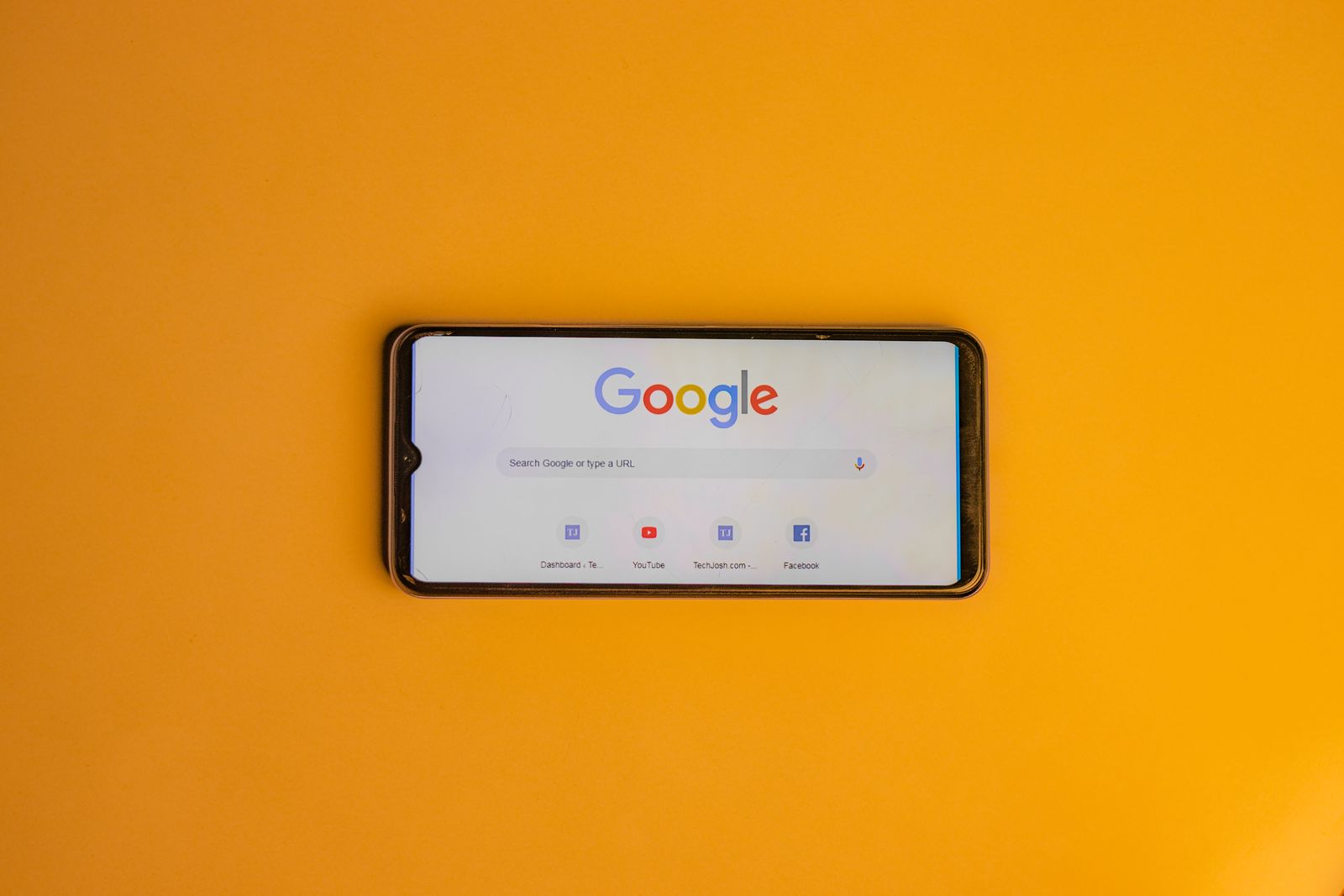
Local SEO for Nail Salons: How to Rank on Google Maps and Win Clients in Your Neighborhood
A step-by-step guide to local search visibility for nail salons — from setting up your Google Business Profile to collecting reviews and targeting the right local keywords. Practical tactics that help you outrank nearby competitors and attract clients who are ready to book right now.
Why Clients Can't Find Your Salon on Google — and How to Fix It
Picture this: a potential client is at the mall, glances down at her nails, and decides she needs a manicure today. She pulls out her phone, types "nail salon near me" or "manicure open now" — and sees three salons pinned on the map. If yours isn't one of them, you just lost a client who already had her wallet out.
According to Google, more than 46% of all searches have local intent. And among searches that include phrases like "near me" or "close by," as many as 28% result in an in-person visit within 24 hours. That's not an abstract stat — those are real people walking through someone's door. The question is whether it's yours or your competitor's.
The good news is that local SEO for a nail salon isn't some dark art, and it doesn't require a big agency budget. It's a specific set of actions you can carry out yourself, or with minimal outside help. This article is your complete roadmap.
Google Business Profile: The Foundation of Everything
If you don't have a verified Google Business Profile (formerly Google My Business), that's your starting point. It's free, and it's the single biggest factor in whether you show up in the local "map pack" — those top three results that appear above everything else when someone searches for a nail salon nearby.
Step one: claim or create your profile. Go to business.google.com, search for your salon, and either claim the existing listing or create a new one. Google will mail a postcard with a verification code to your physical address — this takes anywhere from five to fourteen days. Until you verify, your profile won't show up in local search results at all.
Step two: fill out every single field. It sounds obvious, but most salons leave half their profile blank. Add your business name, address, phone number, website, hours (including holiday hours), and business category. Your primary category should be "Nail Salon." Then add secondary categories that match your services: pedicure, nail extensions, gel nails, nail art.
Step three: write a keyword-rich description. You have 750 characters. Use them to write natural, readable copy that works in your services and location: "Downtown nail salon in the heart of Austin, TX. We specialize in manicures, pedicures, gel nails, nail extensions, and nail art. Open seven days a week, with easy online booking." Don't just stuff in a list of keywords — Google's algorithm recognizes that and penalizes it.
Photos: The Visual Content That Actually Drives Clicks
Google factors profile activity into its local rankings. Profiles with photos get 35% more clicks than those without — and that's straight from Google's own data.
Upload at least 20 photos when you first set up or refresh your profile. What to shoot: the interior of your salon, individual workstations, close-up shots of finished nail designs, and your team. Avoid stock photography — Google is good at recognizing it, and it performs worse than authentic images. A modern smartphone in good natural light is all you need.
Keep adding new photos regularly — two or three per week is a solid habit. Finish a beautiful set of nails? Photograph it, upload it. Google tracks the date of your most recent activity, and fresher profiles rank higher.
Don't overlook Google Posts — the mini-updates you can publish directly to your profile. Use them to highlight promotions, new services, or seasonal offers. Each post stays live for seven days, but consistent posting tells Google that your business is active and engaged.
Reviews: The Most Powerful Trust Signal You Have
Reviews are the second most important factor in local rankings, right after distance and relevance. A salon with a 4.8-star average and 200 reviews will outrank a salon with a perfect 5 stars and 12 reviews — because volume signals real, consistent activity.
How to ask for reviews without breaking the rules. Google prohibits buying reviews or incentivizing them with discounts. But asking clients personally is completely fine. After a service, say something like: "If you enjoyed your visit, we'd really appreciate a Google review — it makes a huge difference for a small business like ours." Then follow up with a text message containing a direct link to your review form, which you can generate inside Google Business Profile.
Respond to every review — positive and negative. For positive ones, be warm and specific: "Thank you so much, Jessica! We're so glad you loved your almond nails. Can't wait to see you next time!" For negative reviews, stay calm and solution-focused: "We're sorry your experience didn't meet your expectations. Please reach out to us directly and we'll make it right." Google reads your responses and treats owner engagement as a quality signal.
Aim for at least four to five new reviews per month as a floor. If you're serving a hundred clients a month and you ask one in five, that's twenty reviews. A year from now, you'll have well over two hundred — a number that becomes nearly impossible for a local competitor to catch.
Your Website and Local Keywords
Even if most of your bookings come through Instagram or a booking app, a well-optimized website gives your local search visibility a serious lift. Google cross-references your website to confirm your location and services.
The essentials your website must have. First, NAP consistency — Name, Address, Phone. These three pieces of information must appear on your website in the exact same format as in your Google Business Profile. This is called "NAP consistency," and even small discrepancies (abbreviating "Street" to "St." in one place and not another) can confuse Google's algorithm and hurt your rankings.
Second, build separate pages for your core services: manicure, pedicure, nail extensions, nail art, gel nails. Each page should be optimized around a specific local search phrase — "manicure in [your neighborhood]," "pedicure near [your city]." This lets you surface in searches beyond the generic "nail salon near me."
Third, add LocalBusiness schema markup. This is a technical but genuinely important step. Schema markup is structured code that tells Google: "This is a nail salon, located at this address, open these hours." Many website builders — Squarespace, Wix, WordPress with the right plugins — can add this automatically. Verify yours is working with Google's Rich Results Test tool.
Mobile page speed matters more than almost anything else. Over 70% of local searches happen on a phone. Run your site through Google's PageSpeed Insights — you want a score above 70 on mobile. If you're below that, compress your images and remove any unnecessary plugins or scripts.
Local Directories and Citations
Beyond Google, there are dozens of directories and platforms where people look for local services: Yelp, Apple Maps, Bing Places, Facebook, Nextdoor, and niche beauty directories. Every mention of your salon with accurate contact information is called a "citation," and these citations collectively reinforce your local relevance in Google's eyes.
Register on at least ten to fifteen directories. The single most important rule: use the exact same address format everywhere. If Google Business Profile shows "1420 Harbor Blvd, Suite 3," that's what it needs to say on Yelp, on Facebook, and everywhere else — not "1420 Harbor Blvd #3" or "1420 Harbor Boulevard." Small inconsistencies erode the algorithm's trust in your business data.
Audit your directory listings once per quarter. Old addresses, wrong phone numbers, duplicate listings — all of these actively work against you and are worth the hour it takes to clean them up.
Geotags and Local Content on Social Media
Instagram and Facebook don't feed directly into Google's ranking algorithm, but they help indirectly. Post your work with a geotag for your city or neighborhood. When clients tag your salon in their Stories, those "presence signals" are something Google has gotten better at reading over time.
Create a Facebook Business Page even if you're not particularly active there. Fill in your address and category. Facebook is one of the most authoritative business directories in Google's view, and having a complete, consistent listing there helps the algorithm confirm you're a real, established business.
Publish content tied to local moments and events. "Valentine's Day nails in Nashville," "Holiday glam in Chicago" — this kind of content demonstrates that you're part of your local community, and it naturally attracts clients in your area who are searching for inspiration.
Technical Details That Determine Your Rankings
A few technical points often get overlooked, but they can make or break your position in the local map pack.
NAP consistency, revisited. Go through every platform where your salon is mentioned — Google, Facebook, Instagram, Yelp, Nextdoor, local directories — and confirm that your name, address, and phone number are written identically across all of them. Spend an hour on this once, and it pays dividends for years.
Mobile optimization is non-negotiable. If your website is hard to use on a phone, Google sees it through engagement metrics: people leave quickly, and your rankings drop. Your "Call Now" and "Book Online" buttons need to be large and easy to tap. Font size should be comfortable to read without zooming. Navigation should be simple.
Embed a Google Map on your contact page. Adding a Google Maps embed with your salon's pin is one more location-confirmation signal that Google takes note of.
Keywords in your Google Business Profile name. Many salon owners list their business with just a personal brand name — "Studio by Ashley." Consider adding a descriptive element: "Studio by Ashley — Nail Salon & Spa." Google weighs keywords in your business name. That said, don't abuse it — listing your profile as "Manicure Pedicure Gel Nails Extensions Best Prices Dallas" is a policy violation and can get your profile suspended.
Monitor your profile for unauthorized edits. Google allows the public to suggest changes to your Business Profile — and sometimes competitors or random users submit inaccurate edits that get auto-applied. Check your profile once a month to confirm your address, phone number, and hours are still correct.
How Long Before You See Results
Honest answer: three to six months with a consistent approach. Local SEO isn't paid advertising, where you spend money and get immediate traffic. It's a compounding investment.
Most salons start seeing early movement four to six weeks after verifying their profile and beginning to collect reviews. After three months of consistent effort, the majority land in the local top ten. After six months, many reach the coveted top-three map pack.
The biggest mistake is stopping once you see early results. Lots of salon owners get excited by the first uptick, ease off, and watch competitors pull past them again within a few months. SEO requires consistency: new photos, new reviews, updated content, month after month.
A simple monthly maintenance routine looks like this: week one, update your profile photos and publish a Google Post; week two, follow up with five to ten clients and ask for a review; week three, audit your directory listings; week four, review your profile analytics and adjust anything that isn't working.
Consistency Beats Perfection
Local SEO for a nail salon isn't a collection of technical tricks. It's a discipline. The salon that does the right things consistently will always outperform the salon that does them perfectly but sporadically.
Start today with the three highest-impact actions: verify your Google Business Profile if you haven't already, upload twenty photos, and personally ask five of your regulars to leave you a Google review. Those three steps alone will produce visible results within a few weeks.
If you want to automate part of this process — especially review collection and post-visit client follow-ups — tools like ManicBot are built specifically for nail salons and can send automatic review requests as soon as an appointment wraps up. But even without automation, this guide and a few hours per month are enough to build the kind of local search presence that brings in new clients for years to come.
Related articles

Nail Salon Inventory Management: How to Track Gel Polish, Supplies, and Cut Losses Without Spreadsheets
Learn how to build a real inventory system for your nail salon without unwieldy Excel files — with concrete numbers, practical workflows, and tools that save money from the very first month.

Digital Loyalty Program for Nail Salons: How to Launch a Points Rewards System That Keeps Clients Coming Back
A step-by-step guide to building a points-based nail salon loyalty program — from choosing how clients earn rewards to automating the reminders that actually drive repeat visits.
Nail Salon Membership: How to Launch a Subscription Package and Earn Reliable Monthly Revenue
A monthly manicure membership isn't just a loyalty discount — it's a fully-formed business model that delivers predictable revenue and keeps clients coming back for years. This guide walks you through how to design, launch, and promote a nail salon membership model from scratch.