YouTube for Nail Techs: How to Turn Videos into a Steady Stream of Bookings
A step-by-step guide to building a YouTube channel for your nail salon — from your very first video to a consistent flow of clients from search and recommendations.
Most nail techs are working the same playbook: Instagram, TikTok, word of mouth. And it works — until it doesn't. Algorithms shift, organic reach collapses, and ad budgets run dry. YouTube is a different beast entirely. A video you film today will keep pulling in views three years from now. Someone searching "gel nails Chicago" or "how to find a good nail tech near me" will find you — and walk in already sold.
This guide is for nail salon owners who want to build a local brand through nail salon video content strategy and turn views into real bookings. No fluff, no theory for its own sake — only what actually works.
Why YouTube, Not Just TikTok or Reels
TikTok and Reels are reach tools. They put your content in front of strangers, but unpredictably — a million views one day, three hundred the next. YouTube is a search engine. People come with a specific question and are ready to watch for a while.
The average YouTube session lasts 40 minutes. Someone who watches your 10-minute video on acrylic extension technique has spent more time with you than they would across five Stories. They know your voice, your style, your salon. Trust builds faster.
There's another argument: a beauty salon YouTube channel local to your area works like a compounding asset. The first three months, growth is slow — but every new video adds to a body of content that works around the clock. A year in, you could have 30–50 videos, each bringing in a few new people every week.
Compare that to paid ads: kill the budget, kill the traffic. YouTube keeps working while you're on vacation.
Which Video Formats Actually Work for a Nail Business
You don't need to film everything. A few formats consistently build audiences in the nail niche.
Design and technique roundups — the most popular content type. "Top 5 Nail Designs for Fall," "How to Do a Marble Gel Manicure at Home" — thousands of people search these every month. You're not just showing off your work; you're positioning yourself as the expert.
Answering client questions — an underrated format. Pull real questions you get asked: "How long does gel polish actually last?", "Does acrylic hurt?", "How do I take care of my nails between appointments?" Every question is a search query that brings in someone new.
Behind-the-scenes salon content — builds trust fast. Show how you prep for your day, how you sterilize tools, how you organize your gel polish collection. This calms the anxiety first-time clients feel about walking into an unfamiliar salon.
Client stories — a powerful conversion tool. Film a short clip of a regular client explaining why she keeps coming back to you. That beats any ad copy you could write.
"How to choose a nail tech" guides — a strategic format. "How to Find a Good Nail Salon in Austin: What to Look For" is watched by someone who hasn't decided yet. You answer their question and become the obvious first choice.
How to Build a YouTube Nail Salon Marketing Channel from Scratch
Start with strategy, not a camera. Three questions to answer before you film anything: Who is your client? What are they searching for on YouTube? What can you realistically film on a regular schedule without burning out?
Keyword research is non-negotiable. Go to YouTube and start typing queries related to your niche. Watch the autocomplete suggestions: "nail tutorial," "gel nail ideas," "nail designs 2025." These are real searches from real people. Build a spreadsheet of 20–30 topics — that's your content calendar for the next six months.
Local targeting is critical. Work your city into titles where it fits naturally: "Nail Salons in Denver: What I Learned After Trying Five," "Best Place to Get Acrylics in Seattle." Local search competition on YouTube is dramatically lower than broad terms. This is the heart of a smart beauty salon youtube channel local strategy.
Your channel page is your storefront. The banner should communicate what you do and where you're located. Your profile photo should be your face or your salon logo. The About section needs your address, phone number, and a booking link. A surprising number of channel owners skip this and lose clients who are ready to book right from YouTube.
Consistency beats equipment every time. One video a week filmed on your phone beats one polished video a month. YouTube rewards active channels. The first three months are the hardest — then the algorithm starts to notice you.
The Tech Side: How to Film Without a Studio or a Crew
Technical fear is the biggest reason nail techs put off starting YouTube. Here's the genuine minimum you need.
Camera: a modern smartphone shoots at more than enough quality for YouTube. iPhone 12 or later, Samsung Galaxy S21 or later — more than sufficient. Don't wait until you've saved up for a mirrorless camera.
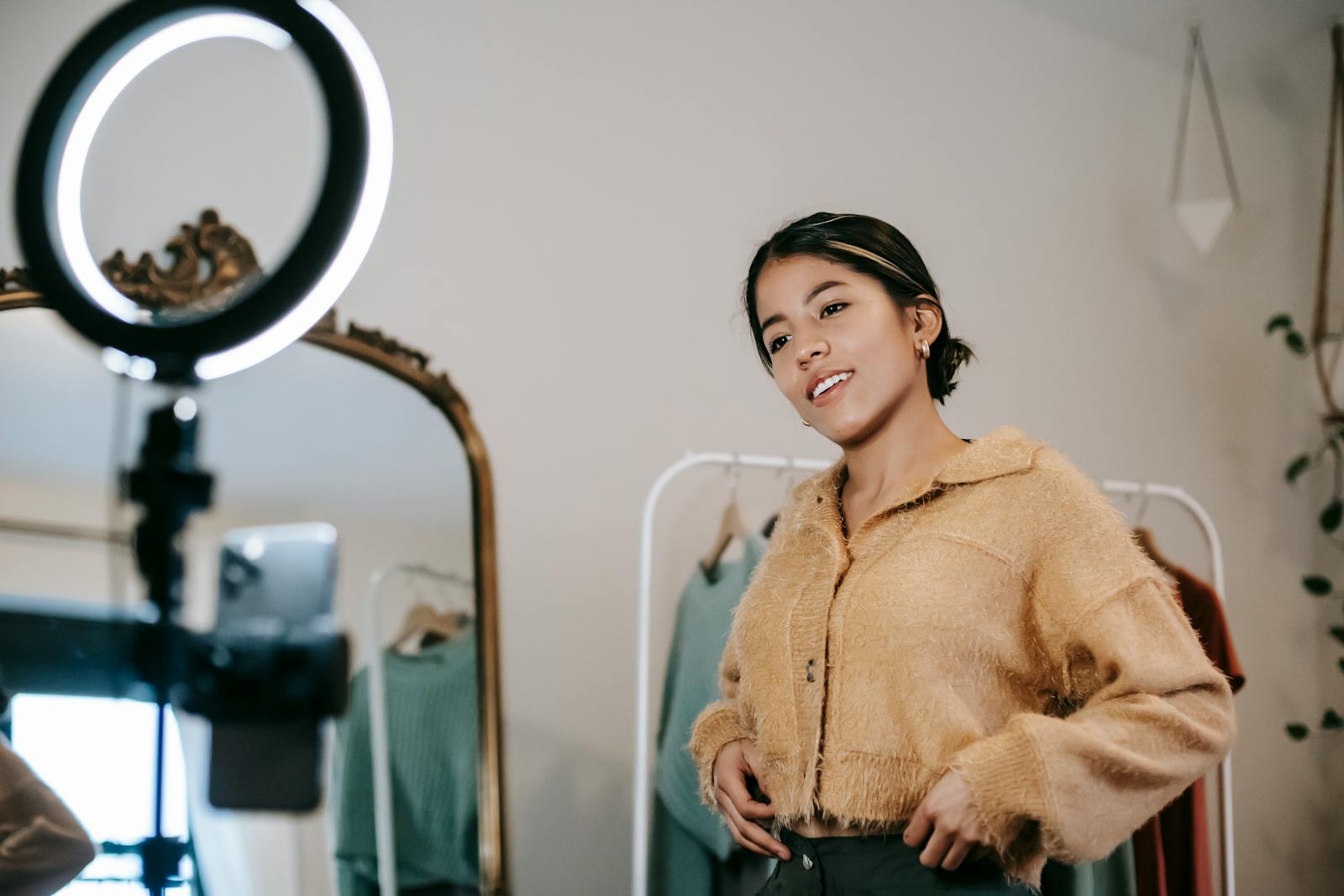
Lighting matters more than the camera. Bad light kills good footage. A ring light costs $30–50 and solves the problem entirely. Place it in front of you, hit record, done. If you're filming nail work from above, add a second light at the side to eliminate shadows.
Audio: viewers will tolerate average video, but they won't tolerate bad audio. A basic clip-on lapel mic for $15–20 sounds dramatically better than your phone's built-in microphone. If you're speaking on camera, this is non-negotiable.
A phone tripod or desk mount keeps your hands free. For overhead nail shots, a flexible arm that clamps to your work table is ideal — these run about $10–15.
Editing: you don't need to learn professional software. CapCut is free, intuitive, and handles everything you need. For YouTube, that means trimming dead air, adding an intro card, and dropping in royalty-free background music. That's it.
How to Optimize Your Videos So Clients Can Find Them
Nail tutorial youtube growth starts before you hit upload — it starts with your title, description, and tags. These tell the YouTube algorithm what your video is about and who to show it to.
The title is the most important element. It needs to include a keyword and tell the viewer exactly what they'll get. "Gel Nail Polish: 5 Mistakes That Are Ruining Your Manicure" outperforms "My Work #12" every time. Keep titles under 60 characters so they don't get cut off in search results.
The video description is an underused tool. The first two lines show without clicking "Show more," so front-load them with your main keyword and a call to action. After that, write a full description of the topic (300–500 words), add timestamps for navigation, and include a direct booking link.
Your thumbnail determines whether people click. Use a bold background, large readable text (3–5 words), and a real photo of your work or your face. Test a few variations — YouTube lets you swap thumbnails after publishing.
Tags: add 10–15, ranging from broad ("nail salon," "gel nails," "nail art") to local ("nail salon Chicago," "gel manicure Austin"). Tags don't directly drive rankings, but they help YouTube categorize your video.
The first 48 hours after publishing are critical. Share the video in your Instagram Stories, in your client WhatsApp or group chat, and ask a few people to watch and leave a comment. The more engagement in the first two days, the more aggressively YouTube pushes the video forward.
How to Turn Views into Bookings: The Conversion Funnel
Views don't pay your rent. You need a system that moves a viewer into a client.
First step: a call to action inside the video. Don't wait until the end. Say it in the middle: "If you'd like to book with me, the link is in the description." Repeat it at the end. People don't read descriptions on their own — they need to be reminded.
Your booking link belongs in three places: the video description, the channel header, and a pinned comment. The fewer steps between "I want to book" and "I'm booked" — the higher your conversion rate. If someone has to call, wait for a DM reply, and then fill out a form, you'll lose a chunk of them.
Online booking converts far better than a phone number for the audience that finds you through YouTube. These viewers are used to doing everything themselves online — give them that option. A "Book Now" button with a direct link to your scheduling page is the minimum.
Build playlists by theme: "Short Nail Designs," "At-Home Nail Care," "About Our Salon." Playlists extend watch time: someone finishes one video and the next one starts automatically. The more time they spend with you, the more likely they are to book.
Use YouTube Shorts for Faster Growth
Shorts are vertical videos up to 60 seconds. YouTube actively pushes them to new audiences for free. Film a 10-second timelapse of a design, add text with the service name and price — done. Shorts don't replace long-form videos, but they bring in new subscribers who then watch your longer content.
Local Brand: How YouTube Makes You "The" Nail Tech in Your City
YouTube nail salon marketing isn't just promotion — it's reputation building. When a potential client has seen 30 of your videos, they see you as an authority, not just another name on Yelp.
Talk about how you work. Why do you use specific products? How do you sterilize your tools? What happens if a client isn't happy with the result? Transparency builds trust, and trust is what makes someone choose you over a cheaper competitor.
Tap into local culture. Film content tied to local events, holidays, or trends specific to your city. "Halloween Nail Inspo for NYC" or "Spring Nail Colors Trending in LA Right Now" — this kind of content ranks well locally and barely competes with international channels.
Collaborations with other local businesses are a powerful growth lever. Partner with a local hairstylist, photographer, or beauty supply shop to film a joint video. You swap audiences and gain new subscribers who are already in your city.
Consistency beats virality. One video with a million views won't build your business. A hundred videos with a thousand views each will. Think of YouTube as a long-term asset, not a lottery ticket.
Measuring Results: The Numbers That Actually Matter
Not all metrics are equally useful for your business. Here's what's actually worth tracking.
Watch Time is YouTube's primary ranking signal. If people watch your videos to the end, the algorithm promotes them more aggressively. Aim for an average view duration above 50% of the video's length.
Click-Through Rate (CTR) shows how compelling your titles and thumbnails are. A healthy CTR for a smaller channel is 3–6%. If you're below that, experiment with your thumbnails.
Link clicks from the description are a direct measure of how many viewers are interested in booking. Google Analytics or the built-in analytics in your booking software will tell you how many of those clicks turned into actual appointments.
Subscriber growth over time — don't chase vanity numbers. Quality matters more: 500 subscribers from your city are worth more than 5,000 from random places with no intent to visit.
Track where new clients come from. Just ask when they book: "How did you find us?" A solid chunk will say "YouTube" — that's your direct ROI from the channel.
Conclusion: What to Do Starting Today
YouTube is a marathon, not a sprint. But every marathon has a first step. Here's a concrete 30-day plan:
- Create your channel and fill out the profile: photo, description, salon address, booking link
- Write a list of 10 video topics based on questions your clients ask you regularly
- Film your first two videos — not perfect ones, real ones
- Set up online booking so viewers can book in a single click
- Publish at least once a week for the first three months
The sooner you start, the sooner the channel starts working for you. Competition in the nail tech space on YouTube is still relatively low — especially in local search. That window will close.
When your YouTube bookings pick up, you'll need a system that can keep up. Platforms like ManicBot help automate online booking, client reminders, and schedule management — so you spend your time on creative work, not admin. But the most important thing is to start filming. The tools will catch up.
Related articles

How 5 simple bots save a nail tech 12 hours a week (and kill the «forgot to book» problem)
Telegram bot, widget, reminders, waitlist, and Google Calendar. A step-by-step breakdown of what actually saves a technician's time in 2026 — with numbers, no fluff.
How to Set Up Automated Birthday Greetings at Your Nail Salon That Turn Special Days Into Repeat Bookings
Birthday and anniversary automation is one of the most underrated client retention tools in the nail salon industry. This guide walks you through building a personalized messaging system that runs on autopilot and keeps clients coming back to your chair.

How to Turn Nail Salon Blog Readers into Real Bookings: CTAs, Internal Links, and a Booking Widget
Your blog drives traffic, but traffic alone doesn't fill your appointment book — you need a deliberate conversion system. This article breaks down exactly where to place calls to action, how to build internal links, and where to position your booking widget so readers actually become clients.