Summer Service Packages and Pricing: How to Raise Your Average Ticket at a Nail Studio
Summer is the best time to grow revenue at your nail business — if you package your services strategically and price them with intention. This article breaks down the specific mechanics: how to build packages, set prices, and use seasonal triggers that actually convert.
Why Summer Is a Growth Opportunity, Not Just a Busy Season
Most nail techs and studio owners treat summer like a gift: clients show up on their own, the books fill, and everything seems fine. That thinking leaves money on the table. High demand without smart packaging is just a full schedule at last year's prices. Real growth in your average ticket happens when you actively manage what clients buy and at what price.
Summer shifts the client mindset. She is heading to the beach, attending a wedding, flying somewhere she has been planning since January. That means she is willing to spend more than usual — you just have to give her the right product to spend it on. Research in the beauty and personal care space consistently shows that a well-structured upsell during peak season lifts average ticket by 25 to 40 percent without growing your client base. You are working with the same people. You are simply selling them more value per visit.
This article covers the specific mechanics: how to build summer packages, how to price them, how to present them without pressure, and how to hold onto the gains once September rolls around.
What a Package Actually Is — and Why It Is Nothing Like a Discount
A package is not a discount. It is a different product entirely. When you run 15 percent off a manicure, you shrink your revenue and train clients to expect lower prices. When you build a package — Gel Manicure plus Pedicure plus Paraffin Treatment for $120 instead of $145 bought separately — you create a sense of value, land a higher ticket, and keep a technician booked for two and a half to three hours instead of one.
The distinction matters: a discount teaches clients to wait for sales and buy cheaper. A package teaches clients to buy more services in a single visit.
A strong summer package is built on three layers. The first is an anchor service — the reason the client booked in the first place, typically a gel manicure or a full set. The second is a complementary add-on she rarely picks on her own but will happily take as part of a bundle: nail strengthening, nail art, paraffin, a spa treatment. The third is the seasonal hook: summer shades, a beach-ready theme, post-sun hand care. That third element is what transforms a standard menu combination into a summer product with its own distinct value.
Three Package Tiers and How to Name Them
Studios find it easiest to sell three levels: entry, mid-tier, and premium. This gives clients a clear choice and gives you multiple revenue outcomes depending on who walks in.
The entry package targets clients who normally book a single service. The goal is to add one item. Example: the Summer Glow Mani — a classic gel manicure with a shade from your curated seasonal palette, presented as a complete look rather than just a color choice. Price it 15 to 20 percent above your standard manicure. The client pays a little more and feels like she got something intentional, not just a random polish pick.
The mid-tier package is where most of your revenue growth will come from. Example: Beach Ready — gel manicure plus pedicure plus an SPF hand treatment (a retail product you can send home with her). This package wraps up in one visit what the client might otherwise spread across two appointments. That is where your average ticket climbs — from a typical $50 gel appointment to $120 or more for the full set. One visit, one block of time, significantly higher revenue.
The premium package is for special occasions: Bridal Getaway, Resort Night, Summer Anniversary. It includes extended care, extra technician time, and a custom nail design. Price it 30 to 50 percent above your standard market rate. You do not need many of these clients — two or three a week changes the numbers meaningfully.
Name your packages with images, not ingredient lists. Not Manicure plus Pedicure plus Paraffin — but Capri, or Sun-Kissed, or Golden Hour. An evocative name reduces price resistance and gives the experience an emotional anchor before the client even sits down.
How to Price a Package Correctly
Here is the mistake most owners make: they add up every service in the package, then knock off 10 to 15 percent. That approach works against you twice. First, you cut margin on services that were already profitable on their own. Second, the client sees a discount and starts to wonder whether your regular prices were inflated to begin with.
The right approach is to build the package price around perceived value, not around cost stacking. Ask yourself: what is the client actually getting for her time and money? How much simpler is it for her to book one appointment instead of three? How long will her results last?
Here is a practical framework. Price the anchor service at full rate. Include the complementary services at a modest reduction — no more than 15 to 20 percent off their individual prices. Then factor in the value of the package experience: priority booking, a color guarantee for seven days, a small gift like a cuticle oil sample or a branded nail file. The final package price should land 10 to 20 percent below the à la carte total — but well above what the client would have spent booking only her usual single service.
Concrete example for a mid-size U.S. studio: gel manicure at $50, pedicure at $65, paraffin treatment at $30 — total if bought separately is $145. The Beach Ready package prices at $120. The client saves $25 and perceives clear value. The studio earns $120 instead of the typical $50 from a solo manicure visit. That is a 2.4x lift on the same appointment slot.
Seasonal Triggers That Actually Drive Sales in Summer
Summer comes with a specific set of emotional levers. Build your package messaging around them.
The vacation trigger is the strongest. Nails that hold up through a week at the pool is a concrete promise clients pay for willingly. Talk about coverage durability, about gel holding through chlorine and salt water. This is not just a manicure — it is vacation prep. That framing matters.
The events trigger covers weddings, graduation parties, corporate summer outings — all clustered into June, July, and August. Build a dedicated package for occasions, focused on design and longevity, and offer booking two to three days before the event date as part of the package value.
The recovery trigger works especially well in late spring and early June. Many clients notice that hands and feet need attention after months of cold weather and closed-toe shoes. Packages anchored in nourishing masks, spa pedicures, and nail strengthening sell through this framing: refresh for summer, restore after winter.
The palette trigger is underrated. Sunset coral, ocean blue, crisp white French with a gold stripe. Curate a signature summer collection of 12 to 15 shades with names — Santorini, Amalfi, Malibu, Coral Bay — and let clients choose their vacation color. It adds engagement and makes the visit memorable in a way that a standard color menu does not.
How to Present a Package Without Being Pushy
Selling a package is not a pitch. It is the right question at the right moment. The goal is to open a door, not push someone through it.
At the time of booking — by phone or text: You are coming in for a gel manicure. We have a summer package right now that adds a pedicure and a hand treatment — it works out to less than booking them separately and wraps everything into one visit. Want me to hold a longer slot for you? That is a neutral offer with a clear benefit. It gives the client a choice and does not feel like a sales call.
During the appointment: Are you heading anywhere this summer? It might be worth doing a pedicure today — our summer formula holds for up to four weeks even in the water. That lands as a recommendation, not a sales move.
The firm rule: offer once. If a client declines, move on. Pressure kills trust and kills return visits. Every technician should know the package contents without looking them up and be able to explain the value in one sentence — not we have three summer packages, but this one saves you $25 and one extra trip.
Online Booking and Packages: Making the Sale Self-Serve
If you have online booking, your packages need to be bookable without a phone call. A client who finds you through search or social media is not going to call to ask about options — she will either book in two clicks or go to whoever makes it easier.
List your summer packages as standalone line items in your booking catalog, not buried inside a promotions tab. Name them descriptively, include a clear breakdown of what is included, and specify the appointment duration. Duration is critical: a client booking the Beach Ready package needs to know she is committing to two and a half hours and plan her day around it.
If your booking platform supports intake questions, add one at checkout: Do you have a special occasion coming up, or are you planning a vacation? The answer helps your technician prepare and suggest a design in advance. The client feels seen before she even walks in.
Set up an automated reminder 24 hours before the appointment with a short recap of her package and any preparation notes — for example, if she booked a pedicure and should avoid lotion that morning. This reduces no-shows and signals a level of care that most studios do not bother with.
Pricing by Market: Matching Your Packages to Your Area
Package logic is universal. Price thresholds vary by market.
In major metro markets — New York, Los Angeles, Chicago, London — clients are accustomed to paying premium prices for nail services and will invest $150 to $250 in a well-positioned package if the value is clearly articulated. The messaging should emphasize quality of materials, longevity, and the experience itself.
In mid-size cities and suburban markets, the strongest argument is time and convenience — everything in one visit. The price point sits lower, but the same principle applies: the package should be visibly cheaper than the same services booked separately, and the savings should be easy to calculate.
In both cases, the visible-savings principle works. Show the crossed-out à la carte total alongside the package price. This is not a manipulation tactic — it is transparency, and clients respond well to it. It does the comparison math for them.
How to Hold onto the Revenue Lift After Summer Ends
Summer closes, but clients who have gotten used to booking packages tend to keep the habit. The key is a smooth handoff to the next season.
Starting in late August and into September, introduce fall packages with the same structure but updated themes: recovery after vacation, back-to-business polish, autumn palettes. Do not let a gap open between seasons. A client who just got home from the beach and wants a refresh should immediately see a next package waiting for her — not a blank menu of individual services.
Pull your records and identify which clients booked summer packages. Send them a personal message: Hey, summer is winding down, but we just put together our fall lineup — with some of the same treatments you liked. Want to get on the calendar? That is not a mass promotion blast — it is a relationship continuing.
An average ticket raised during summer becomes the new baseline only if you keep delivering structured value. One-off seasonal promotions do not build habits. Packages do.
Conclusion
Summer packages are not about discounts or riding a seasonal wave. They are about controlling what clients buy. A well-built package increases revenue per visit by two to two and a half times without adding new clients, without an ad budget, and without cutting prices.
Start with one mid-tier package. Test it with your current clients over two to three weeks. Track conversion and average ticket. Then add the entry and premium tiers. This is iteration, not a full launch.
If you want a system to handle online booking, automated reminders, and package listings without manual overhead, ManicBot is built for exactly that — online booking with package slots, automated appointment reminders, and basic average-ticket analytics. The tool scales what already works. The product comes first.
Related articles
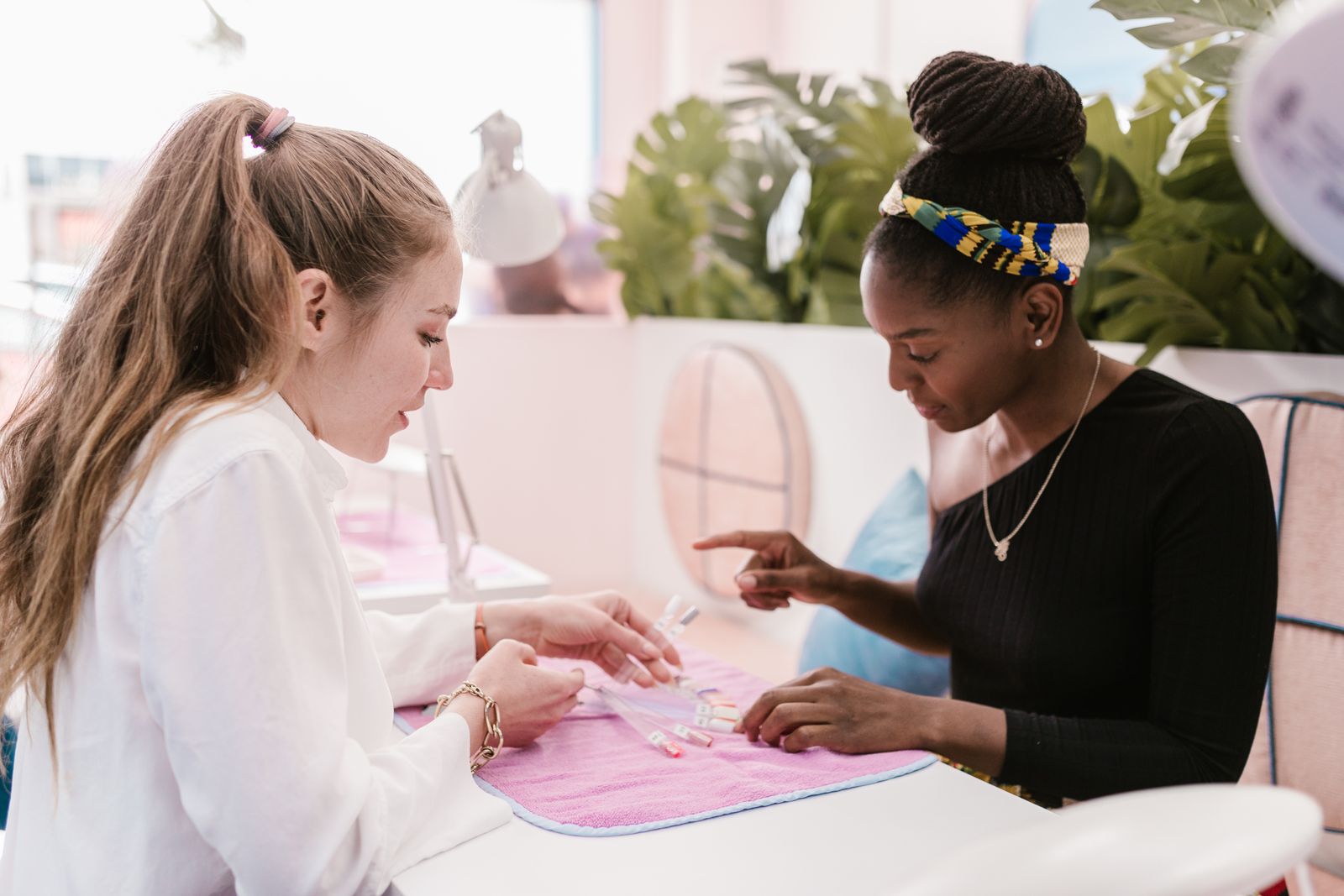
Managing Your Nail Tech Team Through the Summer Rush: Scheduling, Motivation, and Keeping Your Best Staff
Summer is the busiest — and most unpredictable — season for any nail salon. Here is a practical, step-by-step guide to building a schedule that holds, keeping your team motivated through the heat, and making sure your strongest techs are still with you come fall.
How Nail Studios in Warsaw Are Getting Clients Through TikTok for Free: A Practical Guide
TikTok has become one of the most powerful free marketing tools for nail techs in Warsaw — and that's no accident. Here's exactly how studios are filling their books through video, and what you can start doing today.

How to Win Back Lost Nail Salon Clients: Automated Reactivation Campaigns, Personalized Offers, and Perfect Timing
Client churn is a silent revenue leak that's easy to overlook — until your appointment book starts looking empty. This guide walks you through a step-by-step strategy to win back nail salon clients: when to reach out, what to offer, and how to automate the entire process without blowing your budget.