Nail Designs That Will Own Summer 2026 — and How Salons Can Actually Profit From Them
We break down the biggest summer 2026 nail trends — from chrome jelly to minimalist florals — and give you practical tools to turn those trends into bookings before your competitors do.
Summer 2026: What Clients Are Already Searching For and Why You Need to Prepare Now
Every spring the same thing plays out: clients walk in with screenshots from Instagram and TikTok, techs scramble to order the right gel shades, and the waitlist for the "new trendy design" stretches two weeks out. Salons that react to trends at the last minute lose money twice — they miss the peak demand window, then discount their way through a backlog.
This article is for owners who want to work differently: know the trends ahead of time, build them into a proper service menu, and communicate them in a way that makes clients book themselves. We will cover which designs will dominate summer 2026, how to promote them both in-person and on social media, how to price them, and what you can automate so marketing does not eat three hours of your day.
Trend 1. Chrome Jelly — The Summer Look That Will Be Everywhere
If there is one design that is going to follow clients from Instagram to the beach, it is chrome jelly. The concept: a sheer, glass-like base in ice, juice, or soap-bubble tones layered with a mirror chrome powder on top. The result looks soft and futuristic at the same time.
Why will it explode specifically in summer 2026? Three reasons. First, the formula has caught up: new jelly gels last three to four weeks without chipping, which meets the demand clients have for low-maintenance wear. Second, it photographs beautifully in any light — and in an era where clients are choosing their manicure specifically because it will look good against a pool or a sunset, that matters enormously. Third, the economics are attractive: chrome powders are inexpensive to stock but allow you to charge $12 to $18 more than a standard gel polish set — margin with almost no added material cost.
Practical tip: offer three chrome jelly variations — "Ocean" (icy blue with silver), "Watermelon" (pink with rose gold), and "Golden Hour" (peach with copper). Give each one a name and list them as a standalone collection on your menu. The names are marketing that costs you nothing.
Trend 2. Floral Minimalism — Flowers That Do Not Shout
Floral nail art has been around forever, but summer 2026 reimagines it completely: no dense bouquets or full-coverage peonies. Instead, a single fine-line outline bloom done with a thin striper brush, a watercolor wash with a barely-there petal, negative space used as a deliberate design element.
This style resonates especially well with professional clients and women over thirty who want something elegant without being obvious about it. Classic French tips no longer carry the freshness they once did — floral minimalism has filled that gap.
The salon economics are solid: the design adds fifteen to twenty-five minutes to the service and supports an add-on price of ten to eighteen dollars depending on complexity. All your tech needs is a fine liner brush and gel paint in a handful of shades. No stamps, no special equipment.
How to promote it: run a "before and after" Stories series — show a bare nail, film the design being painted in real time, reveal the finished look. This format consistently gets three to four times more views than a static photo and drives saves, which tells the algorithm to push it wider.
Trend 3. Baroque Nails and 3D Embellishments — For Clients Who Want the Full Effect
Running alongside minimalism is its complete opposite, and it is not going anywhere in summer 2026. Dimensional elements — crystals, pearls, gold wire, textured motifs, raised ornaments — delivered with a luxury, maximalist aesthetic that nods to gilded interiors and old-world opulence.
This segment matters for a specific reason: it is your highest-margin work. A design with dimensional embellishments can carry an add-on of thirty to fifty dollars over a base service, and clients will pay it willingly because they understand, correctly, that this is not something they can replicate at home. This is where a tech demonstrates real skill rather than simply applying color.
There is a catch, though: it requires preparation. Quality crystal adhesive, a broad range of stone sizes and shapes, comfort with 3D nail art gels — all of this needs to be ordered and practiced before the season opens. If your team has not worked with dimensional design, April and May are the time for in-house workshops.
Promotion tip: close-up video is the only thing that sells this work properly. Shoot fifteen-second clips of the finished set under good light, pair them with a trending audio track, and post to Reels and TikTok. Both platforms are currently favoring handcraft content heavily in their algorithms — a small salon has a genuine shot at hitting the Explore page without paying for it.
Trend 4. Ultra-Nude and "Skin But Better" — the Quiet Bestseller
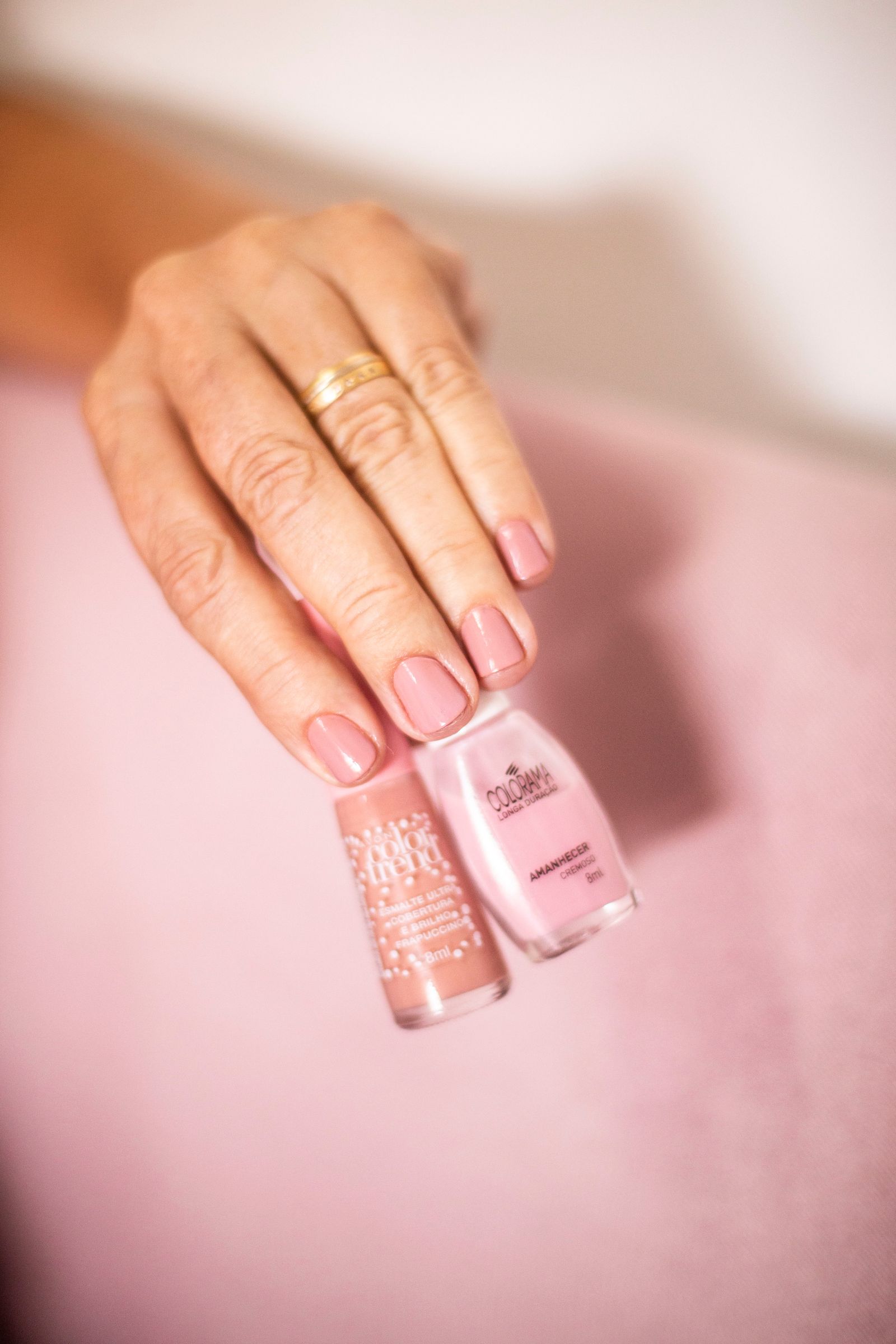
While some clients want chrome and crystals, others are looking for the opposite: a shade so close to their skin tone it looks like flawless bare hands rather than painted nails. This is not invisible polish — it is the idea of nails as self-care rather than decoration.
This trend is durable because it is functional. Nude nails work everywhere: the office, a wedding, the gym, the beach. And clients who wear nude consistently tend to rebook every two to three weeks and rarely drift to another salon, because their tech already knows their exact shade.
How to monetize it: launch a personalized nude service. The tech selects the shade that matches each client's specific skin tone, logs the gel number in her client card, and recreates it exactly at every subsequent visit. This requires no technology beyond a notebook or a basic CRM — but it creates a powerful sense of personalization. The client feels like she has her own dedicated tech, not just a salon she happens to visit.
Trend 5. Aquatic Prints and Ocean Motifs — The Summer Non-Negotiable
Waves, shells, sea glass, gradients flowing from aquamarine to white — this is a predictable summer trend, but ignoring it is a mistake because the demand is real and measurable. According to Pinterest Predicts data from the past two years, searches for "summer nail art" and "ocean nails" climb sixty to eighty percent in May and June and stay elevated through August.
For your salon this means one concrete thing: if your menu does not include a summer-themed collection by early June, you are handing that traffic to competitors who do.
Build a "Summer Menu" — a dedicated page on your website, a saved Instagram highlight, or a printed insert — featuring five to seven ocean-inspired designs with photos and prices. This is not just marketing; it is decision support. When a client can see specific options with pictures and clear prices, she is roughly twice as likely to convert from browsing to booking compared to reading a text price list.
How to Turn Trends Into a Real Product: Concrete Steps
Knowing the trends is half the work. The other half is packaging them into an offer a client can actually purchase.
Step one: before the first of May, assemble your Summer Collection — six to eight designs. These do not need to be original artistic statements. Pull strong reference images, adapt them to your team's skill level, and photograph them on real clients. Authentic photos of real hands outperform stock-style studio shots every time.
Step two: name every design and assign it a price. "Chrome Jelly — Azure Coast, $48" sells better than "Chrome design — from $42." Specificity lowers the anxiety a client feels before committing.
Step three: train your team. Run a short in-house session on two or three of the key techniques. When a tech can execute a design confidently, she recommends it naturally — and that drives add-on sales without any scripted upselling.
Step four: distribute the collection everywhere clients might find you — Instagram, TikTok, your Google Business Profile, and a text or WhatsApp broadcast to your existing client list. Professional photography is not required. Good window light and a smartphone produce more than enough quality for social media.
Social Media Promotion Without a Big Budget
Most small salons make the same mistake: they post photos of finished work and wait for bookings. But social algorithms in 2025 and 2026 do not push beautiful images — they push content that generates interaction: comments, saves, shares.
Three formats that are working right now.
Before-and-after video: film the bare nails, capture the design being applied, reveal the result. Edit it to fifteen to thirty seconds. Videos in this format get saved, on average, four times more often than static images — and saves are one of the strongest signals to the algorithm.
Poll in Stories: "Which color for summer?" with two options. It functions as content and as a direct message to followers that you have choices available. Instagram also shows Story polls to a wider audience than standard Stories.
Question post: "Which trend would you pick for your vacation?" with a few design photos. Comments generate reach. Reply to every comment — each reply pushes the post up in feeds again.
One tool many salons overlook completely: Google Business Profile. Update your photos every one to two weeks and post about new additions. This directly affects how high your salon appears when someone searches "nail salon near me" or "nail salon plus your city."
Pricing Trendy Designs: Do Not Be Afraid to Charge More
The biggest fear most nail techs have is "the client will leave if I raise the price." The data says otherwise. Consumer behavior research in the beauty industry consistently shows that clients read a higher price as a signal of higher quality, especially for complex and on-trend designs.
The baseline rule: a trend design should cost at least thirty to fifty percent more than a standard service of the same base type. If your gel polish service is $35, chrome jelly should be $47 to $52. Dimensional crystal work should be $55 to $75 depending on complexity. This is not gouging — it reflects the tech's time and the cost of materials.
A second tool worth using: bundle offers. "Summer Package: gel polish, floral accent art on two nails, and cuticle oil treatment — $52 instead of $62" outperforms a straight discount. The client gets a sense of value; you get a higher average ticket and an upsell on a retail or add-on service in the same transaction.
Your Existing Client List: The Most Underrated Channel You Have
Most salons spend heavily on attracting new clients and almost nothing on retaining people who have already been in the chair. Yet a returning client costs five to seven times less to bring back than a new one costs to acquire, and she tends to spend twenty to thirty percent more per visit because she trusts her tech.
A simple summer mechanic: two to three days before peak demand kicks in — late May to early June — send a broadcast to your list. "We just launched our Summer Menu — six new designs. Book first while slots are open." No complex marketing funnel needed. You are simply reaching out to people who already know you.
If you have a WhatsApp group or a text list, this takes twenty minutes. If you do not have a list yet, start building one today. At every appointment, ask for a phone number and permission to send updates. Over one summer you can realistically collect fifty to a hundred contacts — and by fall that list will be your most valuable marketing asset.
Online Booking: Why It Matters More in Summer
In summer, clients book impulsively. They see a design in your Stories, they want an appointment right now. If they have to call or wait for a DM response, a portion of them will simply book with a competitor who has a booking link ready.
Salons with online booking convert roughly fifteen to twenty-five percent of incoming social media traffic into actual appointments. Without it, that figure drops to five to eight percent. The difference comes down entirely to how easy it is for the client to take the next step.
Add a direct booking link to every trend post. That is the only call to action you need.
Conclusion: Trends Are a Tool, Not a Race
Keeping up with trends is worthwhile, but no design sells itself. What sells is the package around it — a clear menu, good photos, frictionless booking, and a client's trust in her tech. A trend gives you something to talk about; the quality of the work and the experience of the visit are what bring her back.
The salons that grow steadily all do one simple thing: they prepare for the season before it arrives. They order supplies in April, run internal training in May, launch the summer menu in early June, and meet peak demand ready instead of scrambling.
If you want to spend less time on the operational side — managing bookings, sending reminders, building and maintaining your client list — tools like ManicBot can handle those tasks for you, so you can focus on what actually moves the needle: your craft and your clients.
Related articles
How to Attract Clients with Summer 2026 Nail Trends and Boost Salon Revenue
Discover which summer 2026 nail trends will help attract more clients and increase salon revenue by 30-40%.
Summer 2026 Nail Trends: What to Stock So Your Salon Books Out and Raises Its Average Ticket
We break down the biggest nail trends of summer 2026 — from chrome pigments to builder gel — and show you exactly how to stock your shelves, lift your average service price, and keep your techs fully booked all season long.
Summer Nail Trends 2026: The Designs That Will Bring New Clients Through Instagram
We break down the top summer nail trends 2026 and give you concrete steps for promoting your salon on Instagram — from shooting content to mastering the algorithm. A practical guide for nail salon owners ready to turn views into bookings.