
How Independent Nail Salons Can Win the Price War: Positioning, Value, and Client Retention in 2026
Discount chains compete on price — but an independent nail salon can win on something they can never replicate: trust, expertise, and relationships. Here are concrete strategies for positioning and client retention that actually work.
Every independent nail salon owner eventually faces the same moment: a discount chain opens three blocks away offering a full manicure for $25, and suddenly you're wondering what to do. Drop your prices and you're working at a loss. Do nothing and you watch some clients walk out the door. Panic and start throwing random promotions at the wall — you'll burn cash with nothing to show for it.
The good news: competing with budget nail chains isn't a price battle. It's a value battle. And that's a fight an independent salon is built to win — through trust, expertise, and the kind of relationships a chain will never be able to build. Here are the strategies that are working in 2026.
Why Chasing the Lowest Price Kills Your Independent Salon
Discount chains and budget studios operate on a volume model: fast, cheap, as many clients per day as possible. Their economics depend on throughput — 30 to 40 clients a day per chair at margins of 10 to 15%. An independent salon simply can't replicate that model. You have fewer chairs, higher per-client rent, and almost certainly higher product costs because you're not buying supplies by the pallet.
If you try to match a chain's prices, you'll tank your quality and still never reach their cost base. That road goes nowhere.
The right nail salon competitive strategy against price-cutting is to exit that race entirely. Your salon shouldn't be "the same thing, just a little more expensive." It should be something different — different enough that a direct price comparison doesn't even make sense.
Step One: An Honest Audit — Who Is Your Real Client?
Before you build any positioning, you need to understand who you're actually serving. Pull the last three to six months of booking data and ask yourself:
- How many clients have come back three or more times?
- What's the average spend for repeat clients versus one-timers?
- Which services get booked most often — and which ones carry the best margin?
- What does your typical loyal client's lifestyle look like?
In most markets, an independent nail salon earns 60 to 80% of its revenue from just 20 to 30% of its client base. Those people are your real business. Every strategy you build should start with keeping them and finding more like them.
Trying to please everyone — including bargain-hunters who followed a coupon — dilutes your focus and degrades the experience for the clients who actually keep the lights on.
Independent Nail Salon Positioning: Three Models That Work
There are three directions where an independent salon can convincingly outperform any chain.
Expert Specialization
Pick one or two areas where you want to be the best in your city. It might be strengthening thin natural nails, a specific design aesthetic (minimalist, botanical, editorial), working with clients dealing with nail damage or recovery after acrylics, or advanced nail art techniques. Specialization does several things at once: it justifies a higher price, attracts clients with a specific need, and generates word-of-mouth ("go to them — they're the best in town for that").
A discount chain can't specialize. It doesn't have a dedicated technician with deep expertise — it has a conveyor belt.
Relationships and Personalization
The second path is becoming the salon where people feel known. Remembered — that you're ticklish, that you're allergic to a certain top coat, that your sister's wedding is next month. This sounds simple, but in practice it requires a system: client profiles, notes after every appointment, prompts for your technician before the next visit.
Personalization isn't a luxury add-on. It's a competitive advantage that a chain with rotating staff can never reproduce.
Ritual and Atmosphere
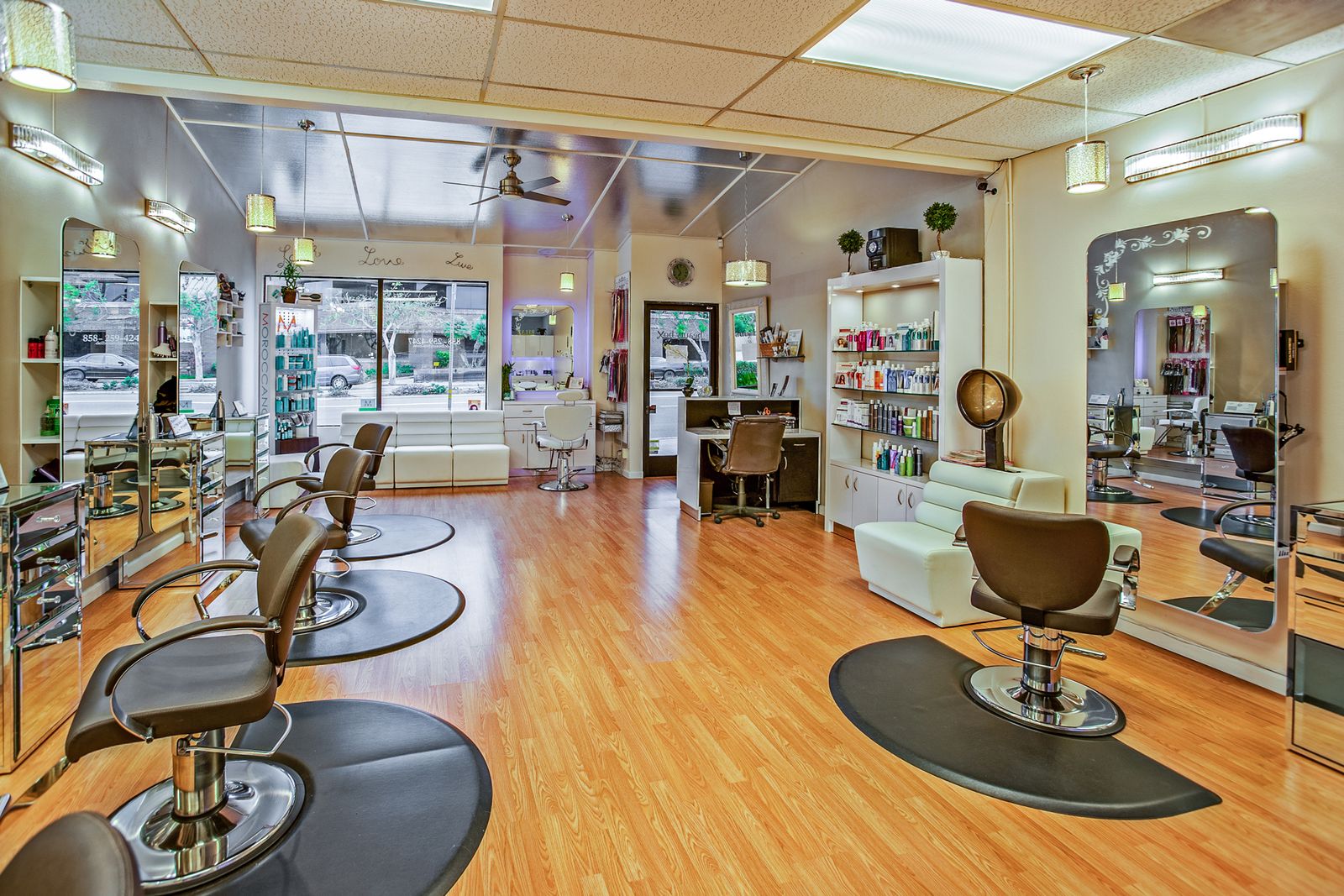
The third path is making a visit to your salon feel like an event, not a chore. A beautiful interior, good tea or coffee, music that actually relaxes you, no waiting around — all of this creates a feeling that a client is investing time in themselves, not queuing for a service. Clients pay for that experience, even if they never put it into words.
Pricing: How to Explain Your Rates Without Apologizing
One of the most common fears among salon owners is "clients will leave if I raise prices." In practice, a well-executed price increase with the right positioning only filters out clients who were already looking for an excuse to leave at the next discount.
A few principles that hold up:
- Don't justify your price through cost ("supplies got more expensive"). Justify it through value ("this takes two hours, your technician specializes in this technique, and the results last three weeks").
- Use price anchoring. If your menu lists a service at $120 alongside one at $75, the $75 feels reasonable — not expensive.
- Packages outperform à la carte. A "manicure + pedicure + strengthening treatment" bundle sells more easily at a higher total price because clients perceive it as a smart all-in-one purchase.
- Never give a discount just because someone asked. It devalues your entire menu. If you want to reward a client, do it through a loyalty program, a bonus, or a gift — not by cutting the price of a specific service on the spot.
Research on the beauty services market consistently shows that clients who came in because of a price deal return on average 1.8 times less often than clients who found you through a recommendation or your expertise. They're less loyal and far more likely to leave the moment something cheaper appears.
How to Stand Out as a Nail Studio Online
Digital visibility stopped being optional a long time ago. But strategy matters: many salons spend hours on Instagram without a clear idea of what to post or why.
A few tactics that are working in 2026:
- "Before and after" content performs worse than "why and how" content. A short video where your technician explains why nails are peeling and what to do about it gets three to four times more saves — and brings in an audience with a real, specific problem you can solve.
- Collect reviews systematically, not passively. A simple follow-up message the day after an appointment asking for a Google review converts at 30 to 40%. That's dramatically better than a business card sitting on the front desk.
- Local visibility beats follower count. A fully optimized Google Business profile — current service menu, photos, fresh reviews — drives more calls than an account with 10,000 followers and no address or pricing.
- Short videos explaining a technique or debunking common nail care mistakes get shared and saved constantly. That's free reach built entirely on being useful.
Loyalty Programs: Retention Without Discounts
Most nail salon loyalty programs underperform because they're built wrong. "Every tenth manicure free" is just a deferred discount — it doesn't create genuine attachment.
A program that actually drives retention is built on a different principle: the client should feel they have something invested in your salon, something they'd genuinely lose by leaving.
A practical model:
- Cumulative points for every visit, redeemable for specific services or upgrades (for example, a free nail art add-on or paraffin treatment once they hit 500 points).
- A real VIP status for regular clients — not just a discount, but priority booking, the ability to reserve time with a specific technician a week out when the schedule is otherwise full.
- Personal milestones: a birthday message with a small bonus. It costs almost nothing and lands surprisingly well — the client feels remembered as a person, not processed as a transaction.
A client who books with the same technician three times in a row has roughly a 70% chance of staying for a year or more. Your job is to help clients cross that threshold. That's exactly where automated appointment reminders and post-visit follow-ups earn their keep.
Handling Churn: Winning Back Clients Who Left for a Cheaper Option
Some clients will leave to try something cheaper. That's normal, and it's workable.
First: don't go silent. A client who stopped coming three months ago probably isn't angry with you — they just drifted. One personalized message ("We haven't seen you in a while — we just started offering a new technique we think you'd love") brings back 15 to 25% of lapsed clients. The key is being specific and genuinely useful, not just saying "come back and see us."
Second: don't apologize for your prices. If a client returns after trying a budget chain, they came back for a reason — a bad result, an uncomfortable experience, quality that didn't hold up. Your job isn't to explain why you cost more. It's to give them a great experience that confirms their decision.
Third: track who's leaving. If you're consistently losing clients of a certain type, or seeing spikes in churn at a particular time of year, that's a signal your offering has a gap somewhere. Sometimes adding one or two services — or adjusting your hours — is enough to close it.
The Operational Side: Systems That Free Up Time for Quality
One reason independent salons lose out to chains on throughput isn't price — it's operational chaos. Booking through phone calls and DMs, manually reminding clients about appointments, losing track of regulars — all of that drains time and energy that should go toward the work itself.
Automating the basics — online booking, appointment reminders, client history tracking — lets your technicians focus on the service instead of the admin. That directly affects quality and, crucially, the personalized attention that sets you apart from any chain.
Platforms like ManicBot are built specifically for this: online booking, an AI receptionist, automated reminders, and marketing tools — all in one place, designed for nail salons. It's not a replacement for the human connection you offer. It's what makes that connection possible — because when the routine is handled, your team has the space to do what no chain can copy.
Conclusion
Competing with discount chains isn't a war you need to win by their rules. It's a different game with different metrics: not clients per day, but the percentage of those clients who come back; not the lowest price in the neighborhood, but the highest satisfaction; not reach, but depth of relationship.
An independent nail salon with a clear focus, confident positioning, and a real retention system is more durable than any discount chain — because it can't be scaled and copied. What makes you special is, by definition, uniquely yours.
Start small: pick one specialization, set up automated reminders, and start collecting reviews consistently. Three months of steady work in these areas produces results that show up in your revenue — and that's an honest return on the time you put in.
Related articles

Client Database for Nail Salons: How to Choose a CRM and Earn More From Every Visit
A practical guide to building a system for managing your nail studio's client database — from choosing the right CRM to segmenting your list and driving repeat revenue through visit history.
Deposits and Prepayments at Your Nail Salon: How to Eliminate No-Shows Without Losing Loyal Clients
No-shows are one of the biggest sources of lost revenue for nail studios — but a well-designed nail salon deposit policy can cut them by up to 90% without driving away the clients you've worked hard to keep. Here's how to do it right.
How to Rank Your Nail Salon at the Top of Google Maps and Win Local Clients Through Organic Search
A step-by-step guide for nail salon owners on setting up Google Business Profile, building reviews, and reaching the top of local search results without spending a dollar on ads.