Local SEO for nail salons: rank for 'nail salon near me'
About 75% of clients start with local search. We break down the Google profile, reviews, photos, and NAP — what really ranks a salon for 'nail salon near me' in 2026.
To rank for "nail salon near me", you don't need a 3,000-zloty-a-month SEO agency — you need three things: a fully completed Google profile, a steady stream of fresh reviews, and an identical name, address, and phone everywhere. About 75% of clients start their salon search with local search — maps or "near me". If you're not in the top three there, for most people you don't exist at all.
This article is a step-by-step breakdown of local SEO for a nail salon in 2026. No fluff, no outdated "buy backlinks" advice. Only what actually moves a salon up in maps and in the "near me" results.

Why local search decides everything for a salon
A manicure is a "here and now, close to home or work" service. Nobody drives across town when there's a salon a block away with good reviews and an open slot. So client behaviour is almost always the same: pull out the phone, type "nail salon near me" or "nails [district]", open the map, look at the top three or four results.
Those top results are the so-called Local Pack: a block of three salons with a map, ratings, and "call" and "directions" buttons. That's where the bulk of clicks and calls go. Everything below it gets a fraction of the attention. Your job in local SEO is to land in that block of three for the key searches in your area.
And here's the good news: competition in local search is far fairer than in regular search. You're not competing with the whole internet — just a dozen salons within a couple of kilometres. Many of them never touch their profile. That means careful, consistent work pushes you ahead faster than you'd think.
There's also a second layer of searches that's easy to miss. Beyond the generic "nail salon near me", people search for specifics: "nail extensions [district]", "pedicure near me", "Japanese manicure [city]", "nails open Sunday". Each of those is its own little niche where competition is even lower. A salon that clearly lists those services in its profile shows up where the generic competitor doesn't appear at all.
Recon: which searches actually bring people to you
Before optimising, spend half an hour on simple reconnaissance — it sets the direction for all the work that follows. Open the map in an incognito window and type the searches you should be found for: "manicure + your district", "nail salon near me", the names of specific services. Look at who's in the top three, how many reviews they have, what rating, how complete their profiles are.
That gives you three things at once. First, a realistic bar: if the leader has 300 reviews, you won't overtake them in a month, but you can absolutely overtake a salon with 15. Second, a list of niche services where competitors are weak — those are where you aim first. Third, an understanding of which photos and content work in your area.
Write down 8–12 key searches you want to rank for — that's your working list. You'll come back to it constantly: to check positions, to add services to the profile, to frame posts. Without that list, optimisation turns into chaotic, gut-feel moves.
The main tool: Google Business Profile
Local SEO for a salon is 90% about working on your Google Business Profile (formerly Google My Business). It's the free listing that shows up in Google Maps and the Local Pack. If you don't have one or it's neglected — start here; everything else is secondary.
A fully completed profile is not just "name and address". It's:
- Exact name of the salon — exactly as it is on the sign, with no "best cheap manicure" add-ons (Google penalises that).
- Categories — a primary one ("Nail salon") plus secondaries ("Beauty salon", "Pedicure", "Nail extensions").
- Hours — current, including holidays and short days.
- Services with descriptions and prices — gel polish, extensions, nail art, pedicure.
- Areas served — the districts and towns your clients travel from.
- Address and phone — clickable and verified.
- Photos — interior, work, team (more on that below).
Google directly rewards completeness. A profile with every field filled ranks higher than a "skeleton" with just a name — because Google is confident it's showing the client a live, current business.
What matters most for ranking now
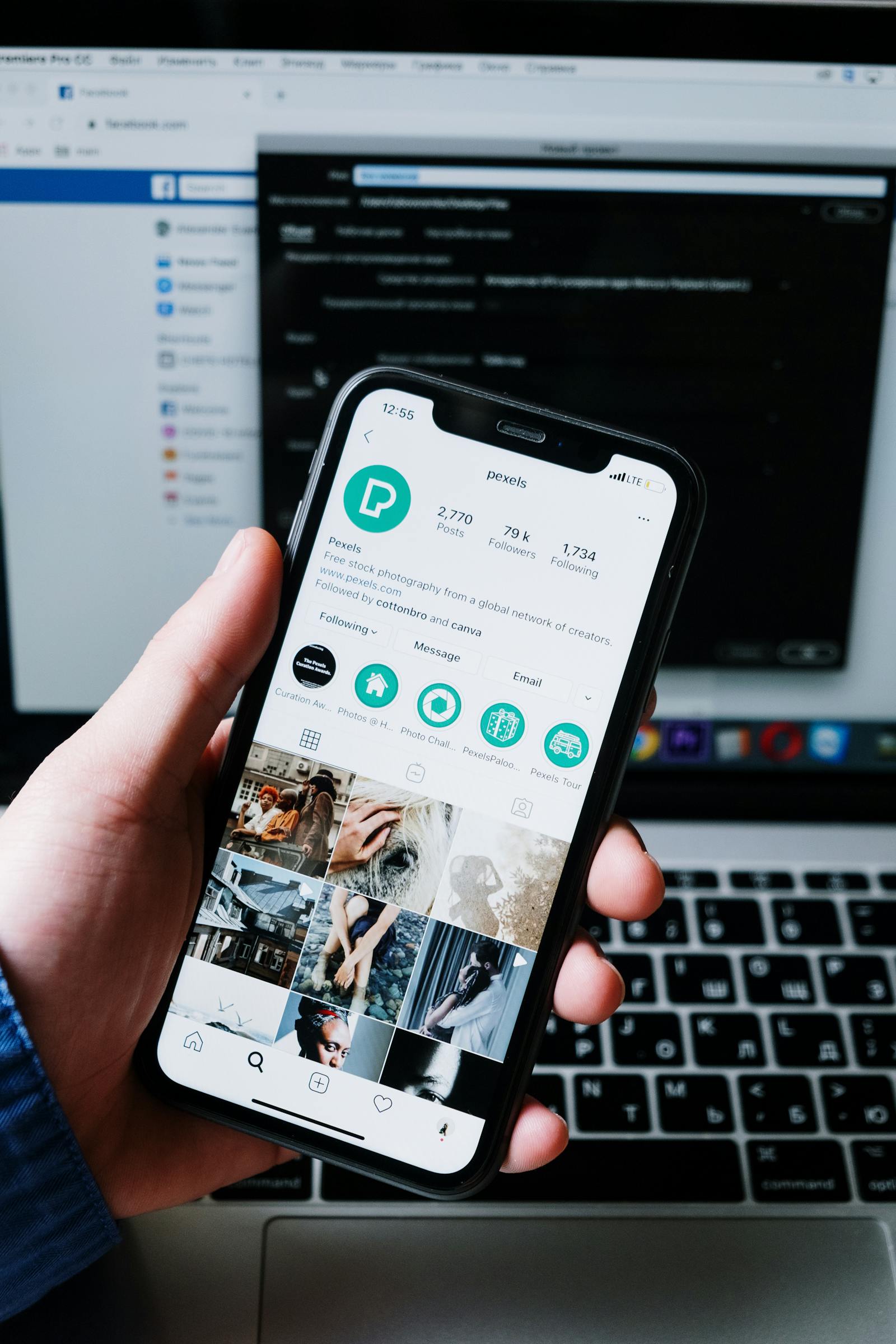
Local SEO used to lean heavily on links and "domain authority". In 2026 the picture is different. Reviews, photos, and recent posts have become the biggest local ranking factors — more than backlinks and domain age.
It's logical if you see it through Google's eyes. Its job isn't to surface the site with the fattest backlink profile — it's to send a person to a salon where they'll have a good experience. And the best signal for "this place is good" is a stream of recent positive reviews, fresh photos of real work, and regular posts showing the business is alive.
Let's rank the three key signals by priority:
Reviews
The strongest factor. Google looks at review count, average rating, recency (a review from this week weighs more than one from two years ago), and whether you reply to them. A salon with 80 reviews at 4.8 whose latest review was yesterday will almost always beat a salon with 200 reviews from two years back.
Photos
Google loves profiles that get photos added regularly. It's an activity signal — and at the same time, it's exactly what the client looks at when choosing. Real photos of your work convert into bookings better than any text.
Recent posts
Posts on the Google profile (offers, new designs, "open slots this week") are an underrated signal. They show Google the business is active right now, and they take up more space in the results at the same time.
Reviews — your main engine to the top
Since reviews are the number-one factor, they need a systematic approach, not "we'll ask when we remember". The key mistake salons make is asking for a review at the wrong moment, or not asking at all.
The best moment is right after the top coat, while the client admires her hands. That's the peak of delight: the nails are perfect, the mood is great, the phone is already in hand for a photo. A request like "would you mind leaving a review? it really helps the salon" lands far better right then than an SMS three days later, once the emotion has cooled.
A few rules that turn reviews into a system:
- Always ask, at the same moment. Top coat applied — the technician voices a short, warm request. It's part of the service, not "homework".
- Make the path frictionless. A QR code at reception or a link right in the messenger leads to a one-tap review form. Every extra step cuts conversion.
- Reply to every review. Both the five-stars and the criticism — politely, on point. It's both a signal for Google and a showcase of your service for future clients.
- Never buy reviews. Google cleans out fakes and punishes them. One fake review isn't worth risking a demotion of your whole profile.
NAP consistency: boring but critical
NAP stands for Name, Address, Phone. The rule is simple: these three things must be absolutely identical everywhere your salon is mentioned — in the Google profile, on your site, on Instagram, in directories, on Facebook, and in any local listings.
Why does it matter? Google cross-references mentions of your business across the whole internet. If one place says "10 Marszałkowska St.", another says "Marszałkowska 10/3", and the phone is written sometimes with +48 and sometimes without — the algorithm isn't sure it's the same salon and lowers trust. And trust feeds directly into ranking.
What to check and standardise:
- Name — identical spelling, no "Studio" / "Studia" / "studio" variations.
- Address — one format, down to abbreviations and the unit number.
- Phone — one primary number in one format.
Keep a short "NAP reference" in a note and check every new listing against it. That's ten minutes of work that protects your ranking for years.
Photos and content that sell through maps
A profile with no photos is almost a death sentence in the nail industry. Clients choose with their eyes: they want to see your work, the cleanliness of the workspace, the atmosphere. So photos aren't "for decoration" — they're a direct conversion factor and a ranking signal.
The minimum set every profile should have:
- Cover and logo — the recognisable face of the salon.
- Interior — workstations, waiting area, reception.
- Work — 15–30 fresh photos of manicures and nail art, no stock images.
- Team — the technicians' faces; it builds trust.
Then comes consistency. Add a few new photos every week. It keeps the profile "alive" in Google's eyes and gives returning clients a reason to look again. The same content works in Google profile posts: a new design collection, a pedicure offer, open slots for the weekend.
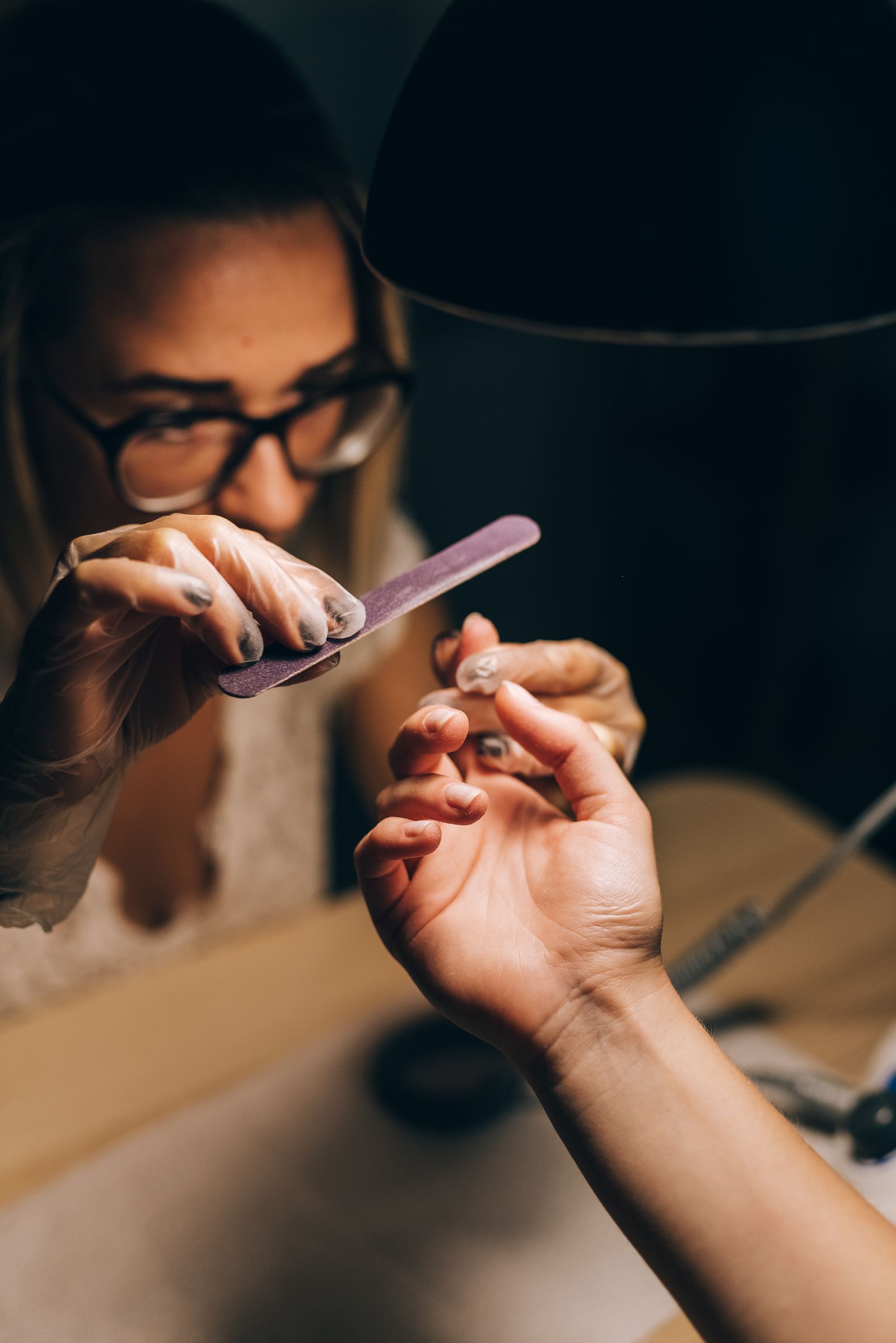
One practical trick: name the files meaningfully before uploading — not "IMG_4821.jpg" but "manicure-gel-nude-warsaw.jpg". It's a small thing, but it helps Google understand the context of the shot. And shoot in good light: dark, blurry photos repel more than no photo at all.
How long to wait for results
Honesty is needed here, because the market is full of "top-1 in a week" promises. The reality: a meaningful improvement in local search positions takes 3–6 months of systematic work. That's the time Google needs to accumulate enough signals — reviews, photos, activity — to reconsider your place in the results.
But there's an important nuance: changes to the Google profile itself can show up in weeks, not months. Fill in every field, add categories, services, areas served, upload photos — and you can quite reasonably see a rise in views and calls within the first month. What "ripens" slowly is the competition for top positions on high-volume searches; baseline visibility grows fast.

The takeaway for an owner: don't quit after two weeks if "nothing took off". Local SEO isn't a campaign — it's hygiene you maintain continuously. In return, the result compounds and doesn't vanish the moment you switch off the ads.
Why this beats paid advertising
Many salons reflexively pour budget into targeted ads and Google Ads. Advertising works, but it has a fundamental flaw: you pay per click, and the second you switch off the budget, the flow stops. It's renting attention, not building an asset.
The combination of "Google profile optimization + rebooking automation" usually beats paid ads for a local salon. The logic is simple: the profile and reviews are an asset that keeps bringing clients for free for months. And rebooking existing clients costs a fraction of acquiring new ones through ads.
Let's compare the two approaches at their core:
Paid ads — a fast start, but expensive per click; the flow stops when the budget stops; it builds no long-term asset.
Local SEO + retention — slower at the start (3–6 months), but almost free per client, compounds over time, and every new review strengthens the next one.
This doesn't mean abandoning ads entirely. But if the budget is limited — and for most salons it is — the first money and time should go into the profile, reviews, and client return, not into the auction for clicks.
Where ManicBot fits
Local SEO is easy to describe and hard to maintain by hand — especially the review stream and data consistency. This is where ManicBot takes part of the routine off your plate automatically.
First, every salon in ManicBot has a public profile and a city directory page — an indexable, consistent presence on the web with a single NAP. It's an extra verified listing that reinforces the signals about your business and doesn't diverge from your Google profile.
Second, the review-request automation fires after every visit — at exactly the moment the client is happy. That's the "review flywheel": each visit gently converts into a fresh review, which is the number-one ranking factor. You don't need to remember whom to ask and when — the system does it itself and keeps feeding your Google profile with freshness.
What to do: a checklist for this week
Let's pull it all into a concrete plan. Work through the points — you can close most of them in one evening:
- Open and audit your Google Business Profile. Fill in everything: exact name, primary and secondary categories, hours (including holidays), services with prices, areas served, description.
- Upload photos. At least 15–20 real shots: interior, work, team. Plan to add new ones weekly.
- Lock down a NAP reference. Cross-check name, address, and phone on your site, on Instagram, in every directory. Bring them to one consistent form.
- Launch a review system. Ask for a review right after the top coat + a one-tap QR code or link. Reply to every review.
- Turn on recent posts. At least one post a week: an offer, a new design, open slots.
- Plug in automation. Review-request automation after each visit and a public profile in ManicBot, so the flywheel turns without manual effort.
- Give it 3–6 months. Track views and calls in your Google profile. The profile will grow in weeks; positions on competitive searches in months.
Local SEO isn't magic and it isn't a one-off campaign. It's consistent hygiene: a complete profile, a live stream of reviews, a single NAP, and fresh content. Make it a system — and "nail salon near me" will start bringing you clients for free, for a long time.